

Papaya
- The degree of maturity will indicate whether the papaya should be exposed to ethylene. Papayas which are fully mature at harvest should not be ripened with ethylene if they are to be stored for an extended period of time. Papayas of minimum commercial maturity will benefit from a treatment of ethylene with an improvement in texture and color.
- If not using pressurized ripening rooms, then air stack the boxes (at least 2″ between boxes) to ensure proper air circulation. Leave 1½ feet between walls and pallets and about 6″ between pallets.
- Depending upon desired shipping time, bring the pulp temperature to the range of 68 to 77°F (20 to 25°C). Apply 100 ppm ethylene for 24-48 hours (actual time of exposure to ethylene is determined by the maturity of the fruit; a yellowing of fruit color indicates that the papayas are producing ethylene and the generator is no longer needed). To achieve 100 ppm, the generator setting will depend on the size of the ripening room.
- Setting 1 for rooms 1600 – 2500 cubic feet.
- Setting 2 for rooms 2500 – 5000 cubic feet.
- Setting 3 for rooms 5000 – 7500 cubic feet.
- Setting 4 for rooms 7500 – 10000+ cubic feet.
Please note that all rooms vary in terms of how air-tight they are, so if more precise PPM determination is required, air testing for ethylene PPM levels is recommended.
Note: If using a Ridemaster Ethylene Concentrate , this unit will convert 1 US quart of Ridemaster Ethylene Concentrate to ethylene in approximately 12 hours. This will be enough ethylene for 1 ripening cycle depending on the size and condition of the room.Use our generators in rooms of 1600 feet 3 or more (45 m3).
- Maintain humidity at 90-95% to prevent shrinkage during ripening.
- Vent the rooms by opening the doors for 20 minutes every 12 hours to flush out carbon dioxide and bring in oxygen.
- Once the desired level of ripeness is attained, reduced the temperature to 50°F (10°C) for partially-ripe papayas or to 45°F (7°C) for ripe.
These recommendations were amassed from a diverse number of sources for use by clients of Ridemaster, LLC. While we have made great effort to provide accurate and current ripening techniques, Ridemaster makes no warranties regarding these recommendations or the applicability of such information to a particular ripening operation. Please note that we do not provide these recommendations as a replacement for technical ripening experts; if having ripening problems or starting a ripening program, we suggest that professionals be consulted.
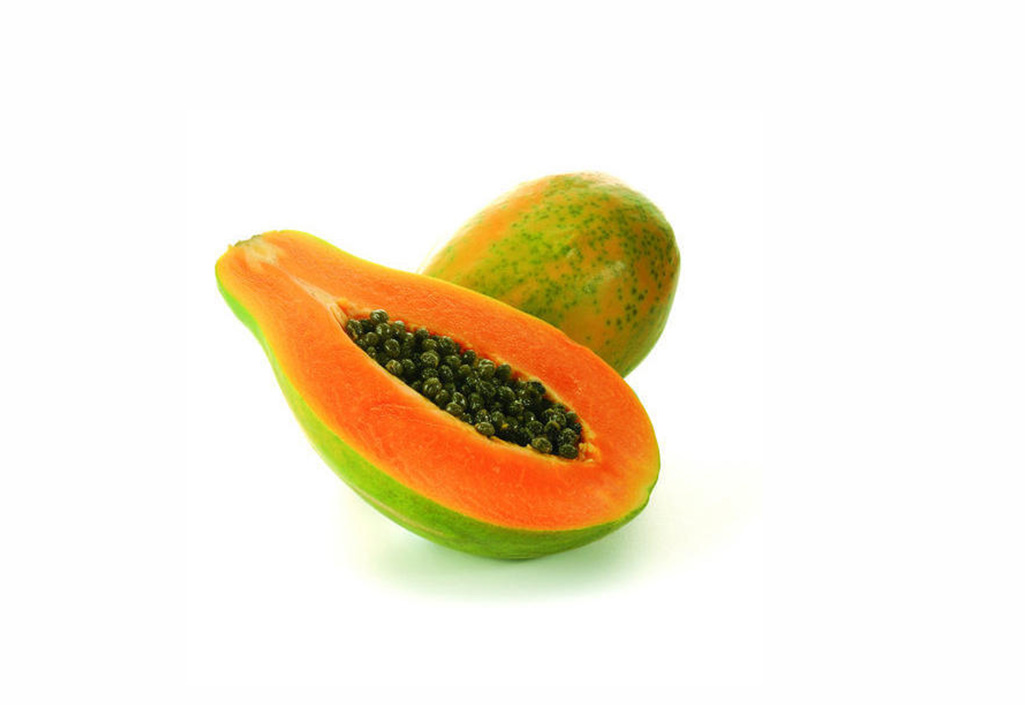
Papayas have been ripened successfully for some time by using Ridemaster and Ridemaster® II Ripening Concentrate to produce ethylene in the ripening room. A standard tomato or banana ripening room may be used for papayas as well.
To achieve 100 ppm, the generator setting will depend on the size of the ripening room.
Setting 1 for rooms 1600 – 2500 cubic feet.
Setting 2 for rooms 2500 – 5000 cubic feet.
Setting 3 for rooms 5000 – 7500 cubic feet.
Setting 4 for rooms 7500 – 10000+ cubic feet.
Please note that all rooms vary in terms of how air-tight they are, so if more precise PPM determination is required, air testing for ethylene PPM levels is recommended.
Note: If using a Ridemaster Ethylene Concentrate generator, this unit will convert 1 US quart of Ridemaster Ethylene Concentrate to ethylene in approximately 12-14 hours. This will be enough ethylene for 1 ripening cycle depending on the size and condition of the room. DO NOT use any of our generators in rooms of less than 1600 ft3 (45 m3)
Humidity is very important. It should be maintained at 90-95%.
Carbon dioxide will build up during ripening. Anything above 1% may retard ripening or cause “checkerboard” ripening within the room. If automatic ventilation is not in place, be sure to vent approximately every 12 hours by opening the doors for 20 minutes even while applying ethylene.
Check pulp temperature at least twice per day and maintain proper pulp temperature.
The fruit should be ready to ship within 3-6 days depending on the season, pulp temperature and degree of firmness. Ripened fruit may have the stem end button become more pliable indicating the softness process is beginning.
Once ripening has reached the desired degree of firmness, lower the pulp temperature to 40-42°F (4.5 to 5.5°C).
CAUTION: Do not hold mature green, unripened avocados at pulp temperature below 40°F. Chilling injury will occur, and the longer avocados are held at low temperatures, the more severe the injury that will be caused. Chilling causes grayish-brown discoloration of the skin and flesh. If chilled before ripening, the fruit will not ripen properly.Ripened avocados are less susceptible to chill damage; they can be stored as low as 36°F (2°C).